Pages

May 31, 2013

breakfast from the jar


Growing up, I was always a big breakfast eater, even when I had little time (which was often the case). I would never skip breakfast, whether it was a bowl of rice with whatever we had from the previous supper, or an occasional piece of toast or two. What I never had, though, was breakfast cereals. Cornflakes and Rice Krispies were never really part of my diet, breakfast or otherwise.


That was, not at least until I was in high school, when I started picking up an odd carton of All-Bran, which to this day I still have a soft spot for.
It was when I was a college student and went to England on a trip that I got hooked on breakfast cereals. My newfound love was muesli, which I'd read about before in a book, but had never actually found its way into my life. I wasn't used to eating oatmeal, but I quickly took to the stuff, and for the following years I'd be seen smuggling bags of muesli back to Japan from every trip to Europe. When my precious stock ran low, I'd go and buy some at one of those fancy import food stores in Tokyo.


Now muesli may be considered healthy, but when you gorge yourself on the stuff every day for breakfast, afternoon snack, and even late-night nibbles, all those nuts and dried fruits do add up fast (do you have any idea how small their 'recommended' serving sizes actually are??), and soon I realized I was eating way too much and stopped buying it.
It has been years since I dropped the habit, and I have treated myself to it only occasionally. But recently I had a sudden craving for muesli and decided to make my own. By "make", I mean tossing all the ingredients together in a bowl.


You can find lots of recipes out there, but here my reference was the ingredient list for Tesco Fruit And Nut Muesli - the one I used to bring home with me.
[oat flakes / almonds, brazil nuts / raisins, prunes, apricots, papaya]

...Okay, my fruit and nut muesli wasn't quite the same as Tesco's, but this would have to do for now, and it did. On a side note, brazil nut was another thing I got hooked on on my first visits to England, along with - and actually, in - museli. Brazil nuts are really hard to come by in Japan even today, but I love muesli with them in it.


Now, if muesli was my old addiction, granola would be my flavor of the week - or in fact, flavor of the year, to be more precise.
I was introduced to granola about the same time I was to muesli, but I preferred the latter, as I found store-bought granola in general a little too sweet for me to eat on a daily basis. Though I did indulge myself every now and then.


And then about a year ago, it struck my fancy all of a sudden, and I found myself craving for granola - more to bake a batch of my own, than to eat it, though the former would surely be succeeded by the latter.


So here goes!
Got my ingredients ready: rolled oats, nuts, dried fruits, and local honey as a sweetener.

Tossed the chopped nuts and rolled oats together in honey, sprinkled with salt, and into the oven they went.

Stirred the mixture a few times while baking, and when the whole thing was nice and golden, removed from the oven and stirred in chopped dried fruits.


When cooled, my fruit and nut granola was ready to serve!
[rolled oats / almonds, walnuts, cashews / raisins, figs, apricots, cranberries, mango, melon, banana / honey / sea salt]

While it does involve a lot of chopping (depending on the type of nuts and fruits you are using) and occasional stirring, other than that little work is required, and your reward is huge. Quite economical too, when you think of how much you pay for the store-bought stuff.


There are countless granola recipes out there, but the one I used here was by Kerrin, of blog My Kugelhopf. Delicious and straightforward and endlessly versatile, this is officially my go-to granola recipe that I've been using over and over again for the past year.
I've been making it with different combinations of nuts and fruits. In my granola I like almonds, walnuts, cashews, pecans, raisins, cranberries, and figs, so these are the ones I use more often than others. And you can absolutely use what you like, and/or you have at hand. This granola is delicious sweetened with either honey or maple syrup.


The best tip I learned from this recipe of Kerrin's was that you mix in your dried fruits after the oat-nut mixture has been baked, not before; this way you don't have to worry about your raisins getting burned and charred. And by stirring them in the oat-nut mixture hot straight out of oven, you can help the dried fruits plump up nicely. On a side note, while it is best to use raw, unsalted nuts, if you do use store-bought roasted nuts, make sure you add them to the mixture about the last 15-20 minutes of baking, or they will have been burned.


Once you have a batch of granola, you've got your breakfast all set for the next week or so.
That is, if you don't polish it off by simply noshing on it like I seem to do often. For breakfast I like to have my granola with yogurt. And even better, some fresh fruits of the season.


Speaking of serving granola with yogurt and fresh fruits, there is a prettier way to do it than throwing everything together in a bowl:
Fill a tall-ish glass with them in neat layers, and you have granola parfait - doesn't that look fancy for something that's so simple? I had a version of this at Le Pain Quotidien in Paris some years ago, and have wanted to do it at home ever since. Done!


If you have ever made your own granola, I think you agree that granola can be highly habit-forming, not only the eating part but the making part as well. I've baked up quite a few batches (though usually half or one-third a regular recipe) over the years, and along the way I've tried my hands at a bunch of different recipes. The following are among the good ones.
[rolled oats / almonds, walnuts, cashews, pumpkin seeds, sunflower seeds, sesame seeds / figs, cranberries, blueberries, goji berries / honey / olive oil / cinnamon, cardamom, vanilla / sea salt]


I was looking for an olive oil granola recipe, and this was what I settled on. The recipe leaves the choice of nuts and fruits to you, and I used what I had at hand at the time.
And somehow, the result reminded me a bit of Greek/Turkish food - perhaps because of the combination of olive oil, cashews, sesame seeds, figs, and the spices? Whatever the reason, I enjoyed the sweet and spicy granola very much.


Another sweet 'n' spicy granola...
[rolled oats / almonds, walnuts, pecans / pumpkin seeds / raisins, cranberries / honey / butter / cinnamon, nutmeg, vanilla, orange zest / sea salt]


This was what I made a lot around Christmas time last year, called, well, Christmas granola. I more or less followed this recipe, using whatever nuts I happened to have. It was the mix of spices that gave the granola an unmistakable Christmas flavor; the orange zest helped too, and so did the Christmas colors of red and green from cranberries and pumpkin seeds (or pistachios).


While we are (sort of) on the topic of winter holidays, here's another recipe that I did often during the cold months:
[rolled oats / almonds, walnuts, cashews / (raisins, cranberries, figs) / maple syrup / canola oil / cinnamon, ginger, cardamom, vanilla / sea salt]


From late fall and well into spring, or practically three-thirds of the year, we need room heating on up here in the mountains. And in the middle of the winter when daytime temperatures hardly reach 0C/33F for days on end, we often leave the heating on all day, and while doing so we take advantage of our small space heater by get some cooking done on top of it, rather than the stove or oven. That was when I wondered if I could bake a batch of granola on the heater, and found a few stove-top/skillet granola recipes on the Internet.


Among them I used this recipe, more for the techniques than the actual list of ingredients. Basically, you dry toast the oats first, then toss them with nuts and flavorings, and cook further. You can turn pretty much any oven-baked granola recipe into a skillet version I think, though their color tend to be on the lighter side.


Skillet granola is a little 'different' in that it involves an unconventional (for granola) technique, and the following are also something different - in terms of the ingredients used.
Now, can you tell what this is? If you have ever had mugi gohan in Japan, this is what's in it, cooked together with rice.


Commonly called oshi-mugi in Japanese, this is essentially rolled barley, but apparently different from the kind you get in the US, which seems to be softer and flakier.
top: rolled oats; bottom: oshi-mugi (rolled barley)

Oshi-mugi has been around for a very long time in Japan, usually added to white rice when you cook it. When I decided to bake up a batch of granola last year, I was a little baffled by the fact that I couldn't find rolled oats in my neighborhood; all they carried was oat flakes. I ended up buying bags of rolled oats online, but couldn't help wish they were more readily available. That was when my thoughts drifted over to oshi-mugi, which is ubiquitous here. I mean, they are both kinds of grains that have been rolled, right?


So I did a bit of research online, and found I wasn't the only one who thought of it. In fact, some people were apparently trying to make granola using oshi-mugi in place of rolled oats, without realizing the two were not the same. Well, they do resemble each other. Kind of.
One opinion that everyone who tried oshi-mugi granola seemed to share was that it's very chewy, or tough, even. Chewy because that's precisely what oshi-mugi is, and tough because it is thicker than regular rolled oats, thus requiring a longer cooking time.


So I set out to make a batch of oshi-mugi granola myself, based on my go-to recipe by Kerrin I've mentioned earlier, but baked my batch at a slightly lower temperature and for a longer time than specified.
When baked, it looked more or less the same as the regular oatmeal granola. But it was definitely chewier, very much more so. It wasn't bad, but I'd prefer it made with oatmeal if given a choice.


Anyways, I now at least know you can make granola with oshi-mugi in place of oatmeal, should you find it necessary.
Or perhaps, you can mix oshi-mugi with rolled oats, and try and boil it first before baking in the oven? I haven't tried it, but maybe I will. After all, oshi-mugi is easy to come by and cheap here.


This idea of par-boiling oshi-mugi and adding to rolled oats occurred to me later when I was making another type of granola.
[rolled oats / millet / pistachios, coconut / cranberries / honey / canola oil / sea salt]

Or rather, toasted muesli as it is called - toasted muesli with millet, coconut, pistachios, and cranberries to be precise. The recipe was created by Aran of Cannelle et Vanille; as the name suggests, this recipe uses millet in addition to oats, and tells you to soak whole millet in boiling water before you drain and add it to the other ingredients, which makes sense as millet takes longer to cook than oats do.


While millets are part of traditional Japanese diet, having been grown for thousands of years, it just never occurred to me to have them as breakfast cereals. So I was curious to give it a try.
And the result? Other than taking on the flavoring nicely, the millet also provided a nice addition of texture to the whole granola mix, making it more fun to eat - loved it. I'll sure be trying and experimenting by adding millet to other granola recipes too!


Now, back to classic oat granola...
[rolled oats / walnuts / strawberries, raspberries, cranberries, red raisins / honey / butter / dried rose petals / black pepper / sea salt]

Well, perhaps not so classic, but looking certainly classy, right? Laced with plenty of rose petals and loaded with red berries, this rose and berry granola was made based on the beautiful rose petal granola recipe created by Heidi of 101 Cookbooks. She shared this recipe on her blog about a year ago when I was eagerly looking for promising granola recipes, so I had to try straight away.
Heidi used dried currants in this recipe, but I was out of them, so had to substitute. As I do so, I decided to go all out and make it full of red berries, which I thought would match up well with the gorgeous rose petals. This was my first time baking with dried raspberries and red raisins; they both have pleasant tartness, much like cranberries.

The recipe also used rose water, which I didn't have either. Here I just had to omit it and added a bunch more rose petals instead.

Even without rose water, the granola perfumed the kitchen with a heavenly sweet scent or rose, which was complemented really well by the tart-sweet berries, while the black pepper added a subtle kick.


To set off the whole thing nicely, I served the granola with fresh strawberries and raspberries.
Isn't this just gorgeous? It may not have been as luxurious as Granola Ispahan from Pierre Herme, but just as scrumptious I assure you!


So it was about a year ago when I first made the rose petal granola, and just this week I made another flower-scented granola...
[rolled oats / coconut, cashews, pistachios / apricots, pineapple, apple, green raisins / honey, brown sugar / canola oil / dried chamomile flowers / cardamom, vanilla, juice of lemon / sea salt]


Like roses, chamomile flower is a widely used in food and drinks. Last summer I was lucky enough to pick a large bunch of chamomile flowers in the corner of a family friend's vegetable patch, and played around with the fresh chamomile flowers. This year, having just received a bunch grown in the same patch, and I was pondering what to do with them this time when it occurred to me to make a granola flavored with chamomile. Because, why not?
One of the ingredients often used together with chamomile is apricot, so I decided to make chamomile and apricot granola, and found this recipe. Starting from there, I made additions and modifications according to my taste and what I think would go well with chamomile; honey and lemon because they have an affinity with chamomile, apple which has a scent chamomile reminds you of, and pistachios and green raisins whose green colors should evoke an image of fresh chamomile plant.


Now I did have fresh chamomile flowers to spare, but I decided to stick to the original recipe and used dried chamomile flowers - which, by the way, were some of the last of a batch I dried myself last year. Smelled still lovely! I made a point of adding green raisins and dried apples after the granola was baked, as they are both prone to browning and tend to dry up quickly.
And this chamomile granola with apricots and apple chips turned out to be one of the most fragrant, sweet, and fresh-tasting batches of granola I've ever had. The colors alone were enough to brighten the things up, even if it was a wet, overcast day.


So these are some of the more memorable batches of granola I've made over the past year. Like I said (twice), the recipe I come back to the most is this one by Kerrin, who was actually one of the people who inspired - and definitely encouraged - me to bake my own granola in the first place.
I swear by the recipe because it's simple, reliable and versatile, but the recipe Kerrin said she liked the most herself was actually not it, but another one here, which she aptly named Kerrin's crunchy granola with dark chocolate and sea salt. The name says it all; crunchy! dark chocolate! sea salt! Who can resist it? I know I can't.


So when Kerrin posted a picture of her batch of granola with coffee-flavored chocolate on Instagram earlier this year, I went overboard and flipped out over it. And Kerrin, either because she wanted to shut me up or was simply amused by my enthusiasm, kindly offered to share her homemade granola with me(!!!), and she did.
So the cute jar of Kerrin's homemade granola traveled all the way from Switzerland - along with a few select bars of chocolate, including those by the superb Swiss chocolate makers.

Kerrin said that she had a jar of granola with my name on it, and so she did - literally =)


This particular batch contained dark chocolate chips and chunks of coffee-flavored white chocolate, and a generous dose of salt rounded the whole thing out beautifully.
I usually prefer yogurt to milk where granola is concerned, but this one I had with milk, which took on the flavors of chocolate and coffee. I also had it by sprinkling over a scoop of vanilla ice cream (mmmmmm), but most of it was gone as I simply munching on it as is. As Kerrin herself said, this granola is more for snacking, meant to be eaten straight from the jar. And she's right, of course.


Kerrin's own homemade granola disappeared much too fast, before I could catch whoever finished it (did I? never!!). On the upside, I still have her recipe for chocolate and sea salt granola, so I can whip up a batch of goodness when I want, over and over again.
Apart from the use of chocolate, this recipe differs from her other recipe (the one I first mentioned) in several ways. For one, it uses apple sauce (I make my own and freeze it) and a bit of brown sugar.


But more importantly, this one does not use dried fruits. Kerrin prefers to have the crunchy chocolate-y granola with whole dried fruits (especially dates) on the side, she explained. Me, I do love loads of dried fruits in my granola, and am too lazy to take a bag of dried fruits every time I eat granola (which happens often over the course of a day), so I take the liberty of replacing some of the seeds in the recipe with some dried fruits that I think go well with dark chocolate.
[rolled oats / rye flakes, buckwheat, poppy seeds / almonds, walnuts, hazelnuts, cashews, brazil nuts / dates, figs, cranberries / dark chocolate, cacao nibs / maple syrup, brown sugar / apple sauce / sea salt]

In case you wondered, the picture above was of another batch than the one shown in the previous photo. I've made this granola several times, each time with a slightly different mix of nuts, seeds, and fruits, and all came out excellent. Here I threw in a handful of cacao nibs to boost the chocolate element and additional crunch.


As Kerrin taught me in her other recipe, I stir in an assortment of dried fruits after the granola has been baked. Once the mixture is completely cool, I add dark chocolate chunks, and finish by a generous sprinkle of fleur de sel.
Like I said, I've made this several times, but this was the first time I managed to take pictures of the finished product. This granola has a habit of disappearing reeeeally quick. You've been warned!


But good news is, this granola - and many others - is quick to whip up, too.
Well, did I mention granola is highly habit-forming?


But really, it is incredibly handy a jar or two of homemade granola. It's good all year round, but personally I find it particularly desirable when the weather is warm enough for me to want to reach for cold milk or yogurt. Arrivals of a wide variety of fresh summer fruits help, too.
So I suspect my habit of making homemade granola will be going strong in the coming months. No complaints there. Absolutely.

April 30, 2013

lemon yellow, from winter to spring


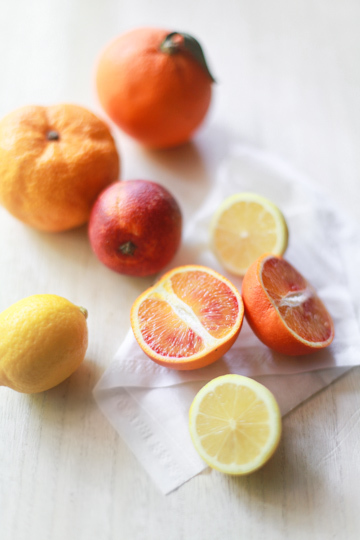
I don't know about you, but I have always associated lemon with summer. Fresh, vibrant, and sharp, it seemed to embody all that you crave when it's numbingly warm and sticky, as it usually is in summer in Tokyo. But as many of you know, lemon is actually a fruit of winter, just as almost all citrus fruits are - although it doesn't thrive in cold climates. And now I think about it, the sun-kissed lemon coming from somewhere warm when you are coping with bitter coldness may be a blessing, something that helps you go through the last few months of winter and look for spring.


At the end of January this year, I ordered a 5-kilo (11-lb) case of organic lemons, fresh and ripe, shipped straight from a tiny island on the inland sea in Hiroshima where they are grown.
In the past, lemons you buy in Japan were almost always imported. More and more domestically-produced lemons, mostly from the southwest part of the country where the climate is mild, have become readily available over the last decade or so. Nowadays you can buy them at many supermarkets even in the countryside, including ones in my neighborhood.


Here I wanted a LOT of them for my purpose, so I went ahead and got them by the case - quite a change from the usual pack I get at the store that contains 2-3 lemons! (Pictured together are yuzu from Kochi and kumquats from Miyazaki I had around the same time.)
The reason why I wanted a lot of lemons was to make our own limoncello. During my last visit in Italy last spring, my friend Sigrid had me very well looked after, and saw me off with loads of Italian goodies for me to take with. One of them was her Italian mother-in-law's homemade limoncello.


I brought it back home and shared with my folks, and we were all blown away - it was strong but smooth, sweet but not cloying, and bursting with lemon flavor. My mother in particular loved it so much we begged Sigrid to ask her mother-in-law to share her recipe with us. She has very kindly done so - in a form of hand-written (!) recipe, which Sigrid translated into English for us.


As far as home-made liqueurs go, the most common kind we use here in Japan is what we call "white liquor", a 35% alcohol neutral grain spirit. As the recipe we received did not specify the type of alcohol to use (it was simply mentioned as "alcohol"), I did a bit of research myself, and found that limoncello is typically made with spirits with much higher content of alcohol. The limoncello Sigrid gave to us was also very strong.
So for our limoncello I got myself a few bottles of spirytus, a 96%(!!) alcohol rectified spirit, as well as our staple 35% stuff. Our plan was to make two batches using the two different kinds of spirit, and see how they each turn out. We also prepared a batch with yuzu in place of lemon and spirytus.


The recipe itself was simple enough; let wafer-thin strips of lemon zest steep in alcohol for a week, filter, combine with syrup and leave it to sit for some months. It called for quite a lot of lemons (hence my 5-kilo case) - more precisely, zest of a lot of lemons. At the end of the first step (combining zest with spirit) we were left with 20 lemons (and six or so yuzu), sans zest but otherwise whole.


So I spent the next couple of days busy using them up....

January 1, 2013

happy 2013!

Just wanted to log in to say hello to all the lovely people and wish you a very happy new year. I realize I've left this place to a state of hiatus but am hoping to come back more frequently this year. after all, 2013 marks the tenth year (!!) since i first got into the blogging thing (first in japanese... this place was born in 2004).  it's incredible to find myself still here doing this, but it's been wonderful to have come to know so many great blogs (food and otherwise) and met some of you, even, who are not only talented bloggers but plain wonderful people. so thanks for sticking around and here's to a great year for all of us around! -cxx